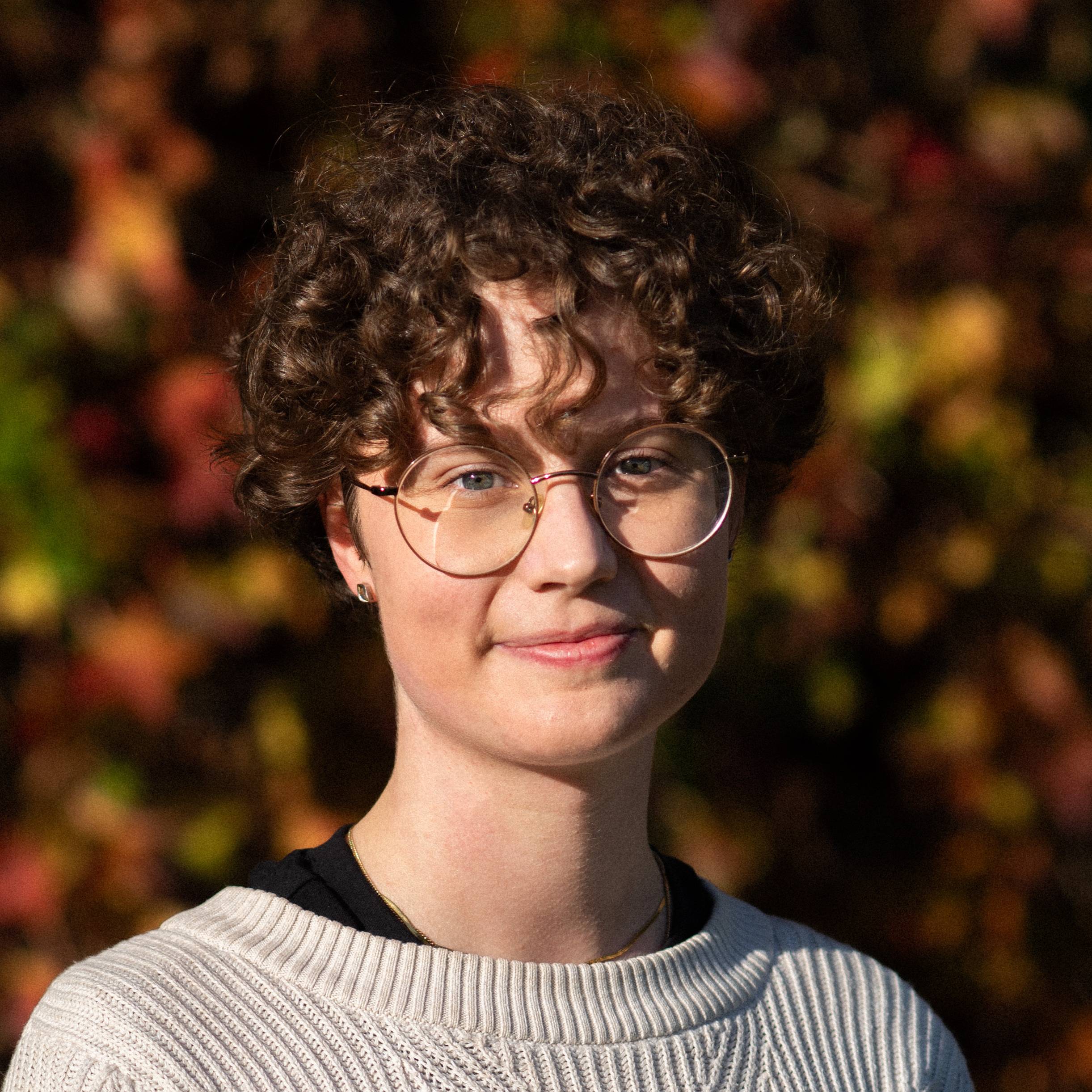
Studying Weather on Other Worlds
I'm a PhD candidate at Trinity College Dublin, working with Dr. Johanna Vos to study the weather and atmospheric variability of substellar objects. Some of the most promising targets for such investigations are cool brown dwarfs: objects that bridge the gap between stars and planets. Brown dwarfs form similar to stars but lack the mass required to sustain nuclear fusion, cooling gradually over their lifetimes. Their intrinsic thermal emission places them in the same temperature regime as some directly imaged exoplanets, where rich and complex atmospheres are observed. Unlike exoplanets, brown dwarfs form as isolated bodies, free from the glare of a nearby host star, allowing for direct imaging and more precise spectroscopic characterization of their atmospheres. These objects exhibit dynamic weather phenomena, including cloud structures and auroral activity, offering insight into the complex atmospheric processes operating in planetary-mass objects.
Research
JWST NIRSpec/Prism Parallel Pipeline
I developed a parallel data reduction pipeline for time-resolved near-infrared spectroscopy with the James Webb Space Telescope (JWST). The pipeline simultaneously extracts absolutely calibrated flux spectra alongside relative light curves, maximizing the scientific return from existing observations. The pipeline itself will be available shortly on my GitHub. In the meantime, I am happy to be contacted regarding requests for time-series NIRSpec Prism data reduction or for further questions related to the pipeline and its applications.
Unravelling the Atmospheric Variability of Substellar Objects using PCA
I am currently using principal component analysis (PCA) to analyse time-resolved JWST spectroscopy, with a focus on identifying the dominant, independent sources of spectral variability in substellar atmospheres. PCA is a computationally efficient, data-driven techniques that allows us to identify and characterise the complex wavelength- and time-dependent behaviour of substellar atmospheres without requiring strong prior assumptions about the underlying physical processes. Applied to JWST time-series observations, it offers an efficient way to separate continuum and band-dominated variability and to connect observed spectral changes to atmospheric structure. This work is ongoing, and the methodology is being developed with the aim of broad applicability current and future JWST time-resolved observations of brown dwarfs and directly imaged exoplanets.
Get In Touch
Feel free to connect with me through any of the platforms below.